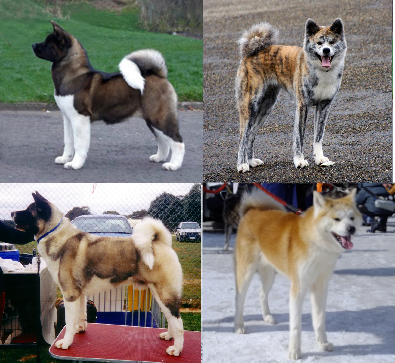
Waited at Shibuya Station every single day for 9 years and 9 months after his owner Professor Ueno died of a stroke at work in 1925. Train commuters fed and cared for him. When he died in 1935, his body was preserved at the National Museum of Nature and Science in Tokyo, where he can still be visited. There are bronze statues of him at Shibuya Station and across Japan. The story is referenced in elementary school textbooks throughout Japan.
In January 1925, Nome, Alaska faced a diphtheria outbreak with no antitoxin. Twenty mushers and 150 sled dogs ran 674 miles in 5.5 days through β60Β°F to deliver the serum. The most dangerous leg β 91 miles across Norton Sound's frozen sea β was run by Togo (12 years old). The final 55 miles into Nome were run by Balto. Balto became the famous one (statue in Central Park) but Togo did the harder work. The Iditarod Trail Sled Dog Race commemorates the run annually.
America's most decorated WWI dog. Smuggled into the trenches of France in 1917 by Corporal Robert Conroy. Captured a German spy by the seat of his pants. Warned soldiers of incoming gas attacks (his nose was sharper than human warning systems). Survived a grenade injury. Promoted to Sergeant by his unit. Met three US Presidents. Lifetime member of the American Legion, YMCA, and Red Cross. His preserved body is at the Smithsonian.
Found in a foxhole in New Guinea in 1944 by US soldier Bill Wynne. The 4-lb Yorkie pulled communication wire through a 70-foot pipe under enemy fire β saving lives by enabling air support. Survived 12 combat missions. Slept in Wynne's helmet. Considered the first 'therapy dog' in modern history; she visited wounded soldiers in hospitals and is credited as a comfort-animal pioneer.
British service dog for Allen Parton, a Royal Navy sailor with severe brain injuries. Endal could fetch objects from supermarket shelves on command, operate ATMs, put items in/out of washing machines, and place his owner in recovery position after a fall. In 2001, he saved Parton's life by pulling him from a wrecked car, dragging a blanket over him, and barking for help. Awarded the PDSA Gold Medal β the animal equivalent of the George Cross.
Last surviving search-and-rescue dog from the 9/11 World Trade Center disaster. Searched the rubble for 12 days at age 2 β her first SAR deployment. Continued working through Hurricanes Katrina, Rita, and Ivan. Visited NYC firefighters annually. When she was finally retired and laid to rest in 2016, Texas firefighters lined the path to the vet's office in salute. Her body was carried out under an American flag.
England, 1966: the World Cup trophy was stolen four months before the tournament from a London exhibition. Police searched for weeks. Pickles, a black-and-white mongrel, found the trophy wrapped in newspaper under a bush in South London. The trophy went to the World Cup. England won the trophy. Pickles got a year's supply of dog food and a starring role in a film. He died chasing a cat the following year β the leash got tangled.
Canadian SAR German Shepherd who searched the World Trade Center on September 12-14, 2001. Recovered Genelle Guzman-McMillan β the LAST survivor pulled from the rubble β after 27 hours under the debris. Trakr's last find was on day three. He was honored at Yankee Stadium and selected as one of 'history's most heroic animals' by Time. After his 2009 cloning experiment, five Trakr puppy clones were placed with elite SAR teams worldwide.
Argentine GSD who showed up at his deceased owner's grave in 2005 β a cemetery he had never been to and had never been brought to. He had walked there alone after his owner Miguel GuzmΓ‘n's funeral. He stayed at the gravesite for 11 years until his own death in 2018. Cemetery staff fed him. The cemetery built a doghouse for him. He sometimes left for short walks but always returned by sunset.
America's first guide dog. Trained at The Seeing Eye in 1928 to lead Morris Frank, a blind young man from Tennessee. Their cross-country campaign demonstrated that blind people could live independently with a trained dog β leading directly to all modern guide dog programs. Buddy's name became synonymous with seeing-eye dogs for two generations. Without Buddy, the global guide-dog system likely wouldn't exist.
Mexican Navy rescue dog who saved 12 lives during the 2017 Puebla earthquake. Famously photographed wearing protective goggles and booties while leading her team through collapsed buildings. Conducted 53 missions during her career, including searches in Haiti, Ecuador, and Guatemala. Retired in 2019. The Mexican Navy unveiled a bronze statue of her in 2017 while she was still working.
First search-and-rescue dog at Ground Zero on September 11, 2001. Arrived 15 minutes after the first tower fell. Survived multiple secondary collapses. His body was found and recovered after the disaster β but he kept working for two more weeks. Awarded the Dickin Medal (UK animal Victoria Cross) on behalf of all 300+ SAR dogs at the WTC site. Apollo lived to age 14, dying peacefully in 2006.
USAF sentry dog at Tan Son Nhut Air Base, Vietnam, 1966. During a Viet Cong attack, Nemo took a bullet through the head, charged forward attacking the enemy, and shielded his wounded handler with his body. He was dragged off the handler twice before he stopped attacking the medics treating his man. Survived. Became the first US military dog ever returned home from Vietnam alive. Toured America as a military hero before dying in 1972.
US Marine military working dog. Wounded by an IED in Iraq in 2007 alongside his handler Corporal Dustin Lee. Lee died at the scene. Lex survived but was grievously wounded β and refused to leave his handler's body. After nearly being euthanized due to PTSD, Dustin's family fought for and won early-retirement adoption. Lex lived out his last 5 years with the family of the man he tried to protect.