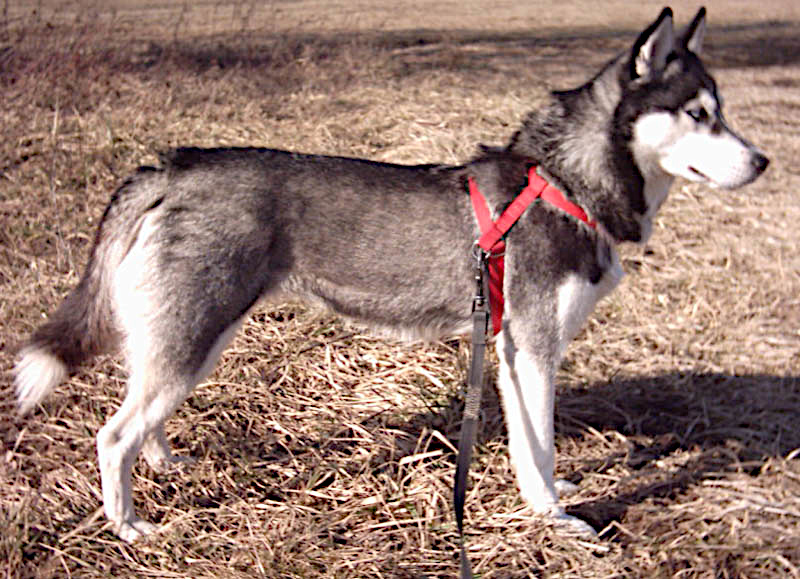
The Siberian Husky was bred to pull sleds across frozen Arctic terrain for hours at a time. That's the most important fact about owning one — they're built for distance running with a high prey drive and a near-nonexistent off-switch.
What makes the White Husky special
A pure white Siberian Husky is the result of a recessive 'all-white' gene — both parents must carry it. Pure white Sibes are NOT albinos (they have black or brown noses, full pigment in the eyes). They're also not 'rare' in the sense breeders sometimes claim — about 1 in 300 Sibe litters produces a pure white. The American Kennel Club recognizes white as one of the standard accepted colors. White Huskies often have blue, brown, bi-color (one of each), or parti-color eyes (split within one eye). Their coat care is identical to any other Sibe: weekly brushing year-round, with two MASSIVE blowouts in spring and fall when the undercoat sheds in clumps. Plan on a daily vacuum during those windows.
What dog parks work for a Husky
Huskies need three things: room to RUN (a 1/4-mile sprint should be possible), a SECURE fence (6 feet minimum — they're climbers and diggers), and a small-dog separation if you have a small Husky or want to socialize a young Sibe. Avoid: open off-leash trails until your dog has bombproof recall (most Huskies never do — accept this). Best: fenced parks with separate large-dog areas, agility courses, and shade. Huskies overheat fast in summer; a park with shaded benches plus a water fountain or kiddie pool is critical.
Heat management — critical
A Siberian Husky is a thermal mismatch with summer in most of the US. Their double coat insulates against −60°F, not 90°F. Critical rules: NEVER shave a Husky (you wreck the coat's heat-shedding cycle). Walk before sunrise and after sunset in summer. Carry water at all times. Watch for excessive panting, drooling, or lying down on hot surfaces — heatstroke can be fatal in 30 minutes. In winter, they're at their absolute happiest. -10°F? They want to be outside all day.
The recall problem
Huskies have one of the lowest recall rates of any breed. Their independent, ancient genetics tell them to run when they see something interesting — and they can hit 25 mph easily. NEVER off-leash unless in a fully fenced area or you've spent 2+ years on professional recall training (and even then, expect failure 1 in 10 times). This is not a training failure — it's the breed. Plan accordingly: long lines for hikes, fenced dog parks for play, NEVER open trails.
Energy outlet alternatives
When you can't get to a fenced park, a Husky still needs 90+ minutes of exercise. Options: bikejor (dog pulls you on bike — they LOVE this; use a proper Bikejor harness, not a collar), canicross (you run, dog pulls), skijor in winter, weight pulling sports, sledding/dryland mushing. A bored, under-exercised Husky destroys couches and digs to China. A tired Husky is a dream pet.
What to look for in a park
- Fully fenced dog parks
Fully enclosed dog parks with secure perimeter fencing — peace of mind for runners.
- Off-leash dog parks
Designated off-leash areas where your dog can run, play, and socialize freely.
- Dog parks with water fountains
Parks with on-site water fountains or dog-friendly drinking stations.
- Dog parks with shade
Parks with mature trees, shade structures, or covered areas to keep dogs cool.
- Dog parks with parking
Convenient on-site or adjacent parking — no more circling the block.
- Dog parks with small-dog areas
Separate areas just for small breeds — safer play for under-25-lb dogs.
Owner park rules of thumb
- • Fully fenced 6+ foot dog parks ONLY — they jump and climb
- • Parks with shade structures (heat-sensitive)
- • Water access (most Huskies love swimming)
- • Avoid: peak summer heat — go at dawn or dusk
- • Avoid: open off-leash trails — recall is unreliable
- • Best partners: parks with agility courses for mental stimulation
Top-matching parks for a Siberian Husky
Real parks from our directory that score highest for the features your Siberian Husky needs.


Common health issues to watch for
- Hip dysplasia
- Juvenile cataracts
- Corneal dystrophy
- Zinc-responsive dermatosis
Definitions in our breed glossary. Always consult your vet. Save the closest 24/7 emergency vet to your phone.
Similar to Siberian Husky
Breeds with comparable size, energy, and group classification.


Siberian Huskys appear in these rankings
Frequently asked questions
How long do Siberian Huskys live?+
Siberian Huskys typically live 12-15 years. Keeping any dog at a healthy weight throughout life is the single biggest factor under your control for maximizing lifespan.
How much exercise does a Siberian Husky need per day?+
Siberian Huskys need 90-180 minutes of daily exercise. Their energy level is very high. Under-exercised Siberian Huskys can develop destructive behaviors — match their needs to your schedule before adopting.
Are Siberian Huskys good with children?+
Yes — Siberian Huskys are typically good with children when properly socialized from puppyhood. Always supervise interactions between any breed and young kids, and teach kids gentle handling. Individual temperament varies.
Do Siberian Huskys shed a lot?+
Yes — Siberian Huskys are heavy shedders, typically with seasonal "blow outs" (3-4 weeks of major undercoat shedding) twice a year. Daily brushing during these periods, weekly otherwise. Robot vacuum strongly recommended.
Are Siberian Huskys hard to train?+
Siberian Huskys are independent-minded and can be challenging to train, especially for first-time owners. They obey when they see the merit, not from blind compliance. Use positive reinforcement, high-value rewards, short sessions, and infinite patience. Avoid harsh "alpha" methods (these create fear-aggression).
Can Siberian Huskys tolerate hot weather?+
Siberian Huskys are bred for cold climates and struggle in heat. Above 75-80°F, limit exercise to early morning or late evening, provide shade and water, and consider AC indoors. Northern breeds can fatally overheat in temperatures most owners consider mild.
Where did the Siberian Husky come from?+
The Siberian Husky originated in Northeast Siberia (Chukchi people). Understanding a breed's original purpose helps explain its modern temperament and exercise needs.
📋 Free Siberian Husky starter checklist
What to bring, what to watch for, and what to expect at the park with a Siberian Husky.